
Have you ever visited the northern Outer Banks on a sweltering summer day, when the sand is so hot you can barely make it to the ocean? You hurry into the surf expecting relief, only to find that the water is shockingly cold! There’s an explanation for these temperature differences along our coast, and it helps tell a larger story about how changing ocean temperatures influence the movements of fish.
North Carolina occupies a unique position along the Atlantic. The warm Gulf Stream flows northward before turning offshore near Cape Hatteras, while cooler waters from the north influence the continental shelf. These northern waters are connected to a larger circulation system that includes the Labrador Current, although that current doesn’t flow directly onto our beaches. Winds can also bring colder water to the surface, occasionally producing those unexpected summertime chills along the Outer Banks.
These contrasting water temperatures help explain why North Carolina supports such a rich mixture of northern and southern marine species. But ocean temperatures are not standing still. NOAA has documented long-term warming across the Northeast continental shelf, including the Mid-Atlantic region. As temperatures change, the places fish travel, feed, and spend each season can change too.
A 2025 study published in the North American Journal of Fisheries Management examined more than 40 years of recreational fishing survey data along the East Coast. NOAA researcher Erik Williams evaluated changes in the geographic distribution of 80 commonly caught marine fish species. About half showed identifiable shifts in where they were caught, with northward shifts occurring more frequently than southward shifts.
Among the species showing northward shifts were cobia, Spanish mackerel, sheepshead, black sea bass, and northern kingfish, commonly known as sea mullet. Others, including bluefish and king mackerel, shifted south.
The findings don’t mean every fish is heading north, or that warming waters explain every change. Food availability, ocean currents, fishing activity, and natural fluctuations in abundance also influence where fish are found. Still, the research provides evidence that where anglers catch many familiar species has changed.
For North Carolina, where warm- and cool-water species have long shared the same coastline, these findings raise some interesting questions. One tarpon’s journey shows just how far some species may travel.
A Changing Cast Along Our Coast
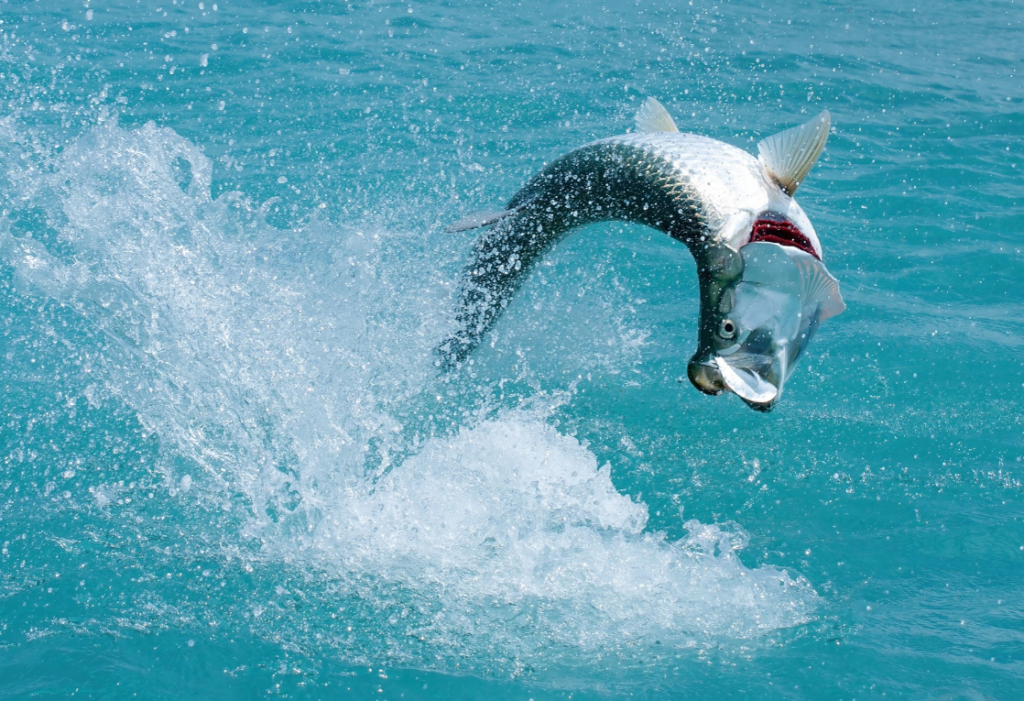
When most anglers think of tarpon, they picture the warm waters of Florida or the Gulf Coast. But researchers have documented some remarkable journeys by these large, silver fish, including one that traveled much farther north than many would expect.
A tarpon tagged in the Florida Keys in May 2017 was detected the following summer near Ocean City, Maryland, more than 1,200 miles away. The movement was documented through electronic tracking and later described in a peer-reviewed scientific publication. Other research suggests that tarpon sightings near the northern limits of their range have become more common in recent years, potentially reflecting changes in ocean temperatures.
Tarpon movements are influenced by both water temperature and the availability of food. Their seasonal journeys can carry them along much of the Atlantic coast, where they encounter changing water conditions and abundant schools of forage fish. The Maryland detection doesn’t establish that tarpon are permanently expanding their range, but it demonstrates how far these fish can travel.
Cobia provide another example. North Carolina tagging studies have documented their seasonal movements north into Chesapeake Bay and offshore waters as far as Delaware. Research also suggests that warmer years create more suitable summer habitat farther north, changing where these familiar seasonal visitors are found along the Atlantic coast.
Not every species follows the same pattern. A recent study of reef fish in the South Atlantic Bight found that most of the 16 species examined maintained relatively stable geographic distributions. The findings illustrate how regional conditions and differences among species can influence their responses to changing ocean temperatures.
Our Foundation’s satellite tagging research is also helping document the movements of adult red drum along the North Carolina coast. Just yesterday, we tagged a 41-inch red drum south of Wrightsville Beach, our southernmost satellite-tagging location to date. The microPAT tag is programmed to release in five months, providing information about where this fish travels and the water temperatures it encounters along the way.
From tarpon traveling unexpectedly long distances to familiar seasonal visitors appearing in different places, fish movements offer a window into the Atlantic Ocean. Some changes may be temporary responses to ocean conditions, while others could reflect lasting shifts. Distinguishing between the two is central to understanding the fisheries along our coast.
A Warming Atlantic: What the Numbers Show
Ocean temperatures change naturally with the seasons, but long-term records reveal another pattern. Across the Northeast continental shelf, including the Mid-Atlantic, average sea-surface temperatures have increased over the past century and a half.
The accompanying NOAA graph illustrates this trend, drawing on historical temperature observations dating to the 1860s. Although individual years vary, average temperatures during the most recent decade have been well above the long-term average. NOAA’s full temperature record and additional information are available here.
These changes aren’t uniform across the Atlantic coast. Ocean currents, water depths, winds, and seasonal conditions create considerable differences between regions. Some years are even cooler than average, despite the longer-term warming trend.
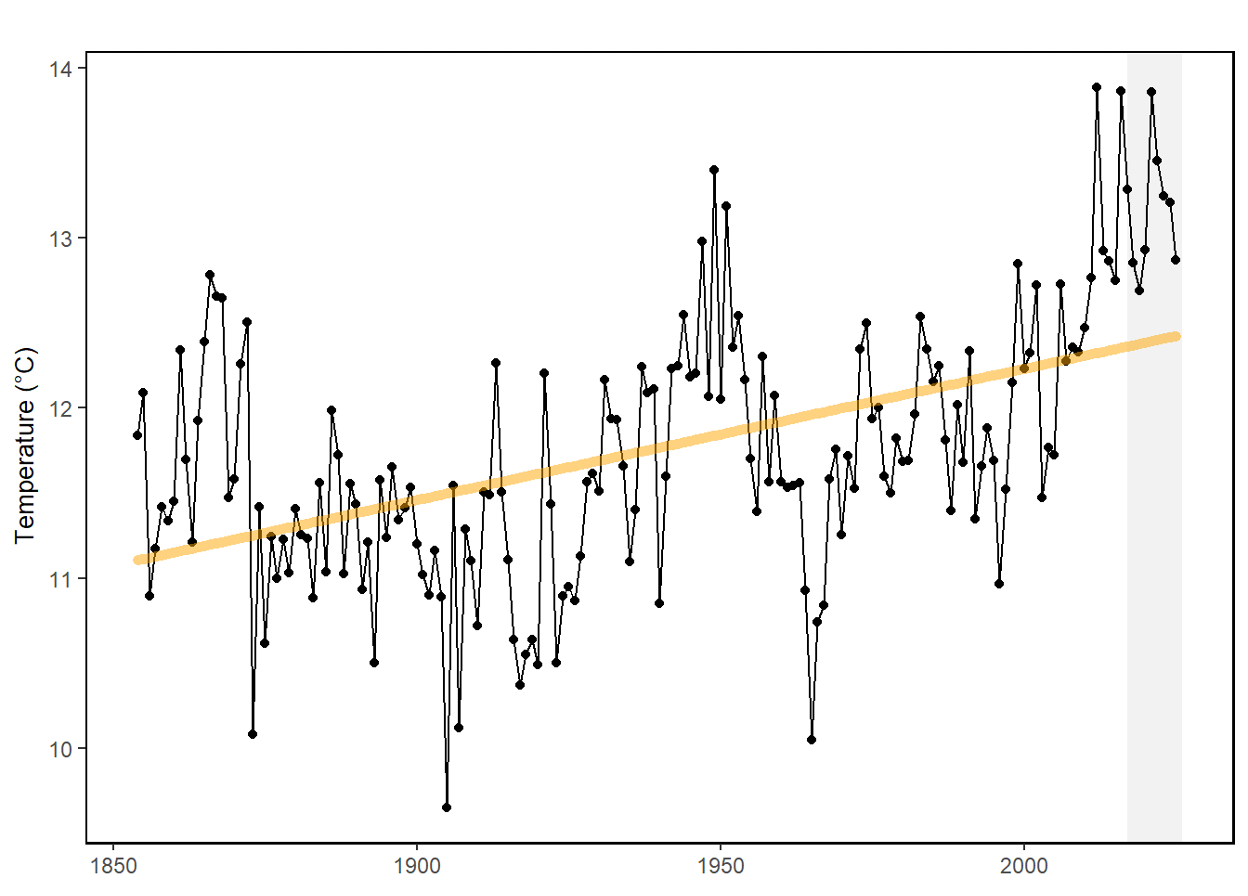
Sea-Surface Temperatures in the Mid-Atlantic: NOAA’s long-term temperature record illustrates annual variability alongside a broader warming trend. The data represent the Mid-Atlantic region rather than North Carolina waters alone. Source: NOAA Fisheries.
This story was first published in our weekly newsletter. Click here to subscribe.